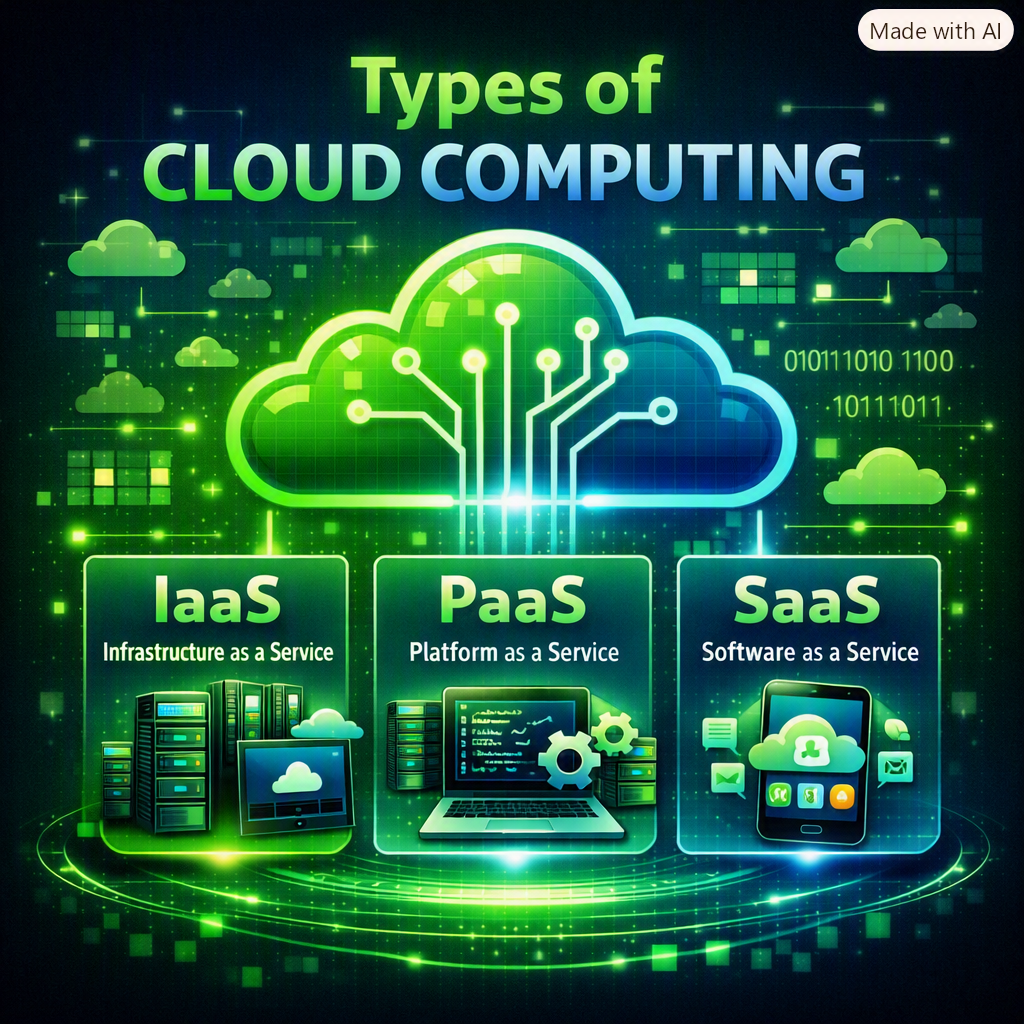
Types of Cloud Computing
Cloud computing comes in several models, and they differ in security, level of control, and price. The right pick depends on what you’re building and what you need from it.
Knowing how these models differ lets you invest wisely from day one. It also helps you avoid unnecessary spending or security gaps caused by choosing a setup that doesn’t match how sensitive your data is or how large your business is.
Contact Us For More Information
Public Cloud
In a public cloud, many customers run on infrastructure owned and operated by the provider. It’s the most widespread and budget-friendly choice, and it fits most ordinary websites and business apps.
Even though the hardware is shared, virtualization keeps each customer’s data logically separated from everyone else’s. That gives a solid level of protection for the majority of business scenarios.
Private Cloud
A private cloud is an environment dedicated entirely to one organization, offering stronger security and tighter control. It’s the natural choice for teams that manage sensitive information or must meet strict regulatory requirements.
Banks, government bodies, and healthcare providers commonly use it, because it lets them decide exactly where their data lives and who can reach it, in line with local data protection laws.
Hybrid Cloud
A hybrid cloud blends public and private models. A company can keep sensitive systems on private infrastructure while using the public cloud’s flexibility and lower cost for less critical workloads.
It suits organizations that are digitizing step by step: they can shift some systems to the cloud while keeping essential ones on their own infrastructure or in a local data center.
Multi-Cloud
Multi-cloud means using more than one cloud provider at once. This reduces reliance on any single vendor and keeps services running if one provider suffers an outage.
How to Pick the Right Model
- Judge how sensitive your data is
- Set a budget for both the short and long term
- Check the legal and compliance rules in your industry
- Think about where your project will be in the next 3 to 5 years
Frequently Asked Questions
Usually the public cloud, thanks to its low cost and flexibility, with no need for heavy upfront infrastructure spending.
Yes. Because resources are dedicated to one customer, there’s less chance of interference or exposure through other tenants.
When you want to avoid depending on a single provider, or to take advantage of different prices and features across vendors.
Yes, that’s the whole idea behind hybrid cloud, and it’s very common among medium and large organizations.